
Estimate how much gravel you need for landscaping projects, driveways, walkways, patios, drainage areas, and garden beds. Enter the area, depth, gravel density, and optional price to calculate cubic yards, tons, bags, and estimated cost.
Gravel Calculator
Calculate gravel volume, estimated weight, bags and material cost for driveways, landscaping, gardens and construction projects.
Gravel Calculation Results
Your estimated material requirements are shown below.
How the Calculation Works
Area: Length × Width
Volume: Area × Depth
Cubic Yards: Cubic Feet ÷ 27
Gravel Weight: Cubic Yards × Density
Wastage: Base Volume × Extra Percentage
Material Cost: Estimated Weight × Price per Ton
Calculations include the selected wastage percentage. Actual weight and cost may vary by gravel type, moisture, supplier and compaction.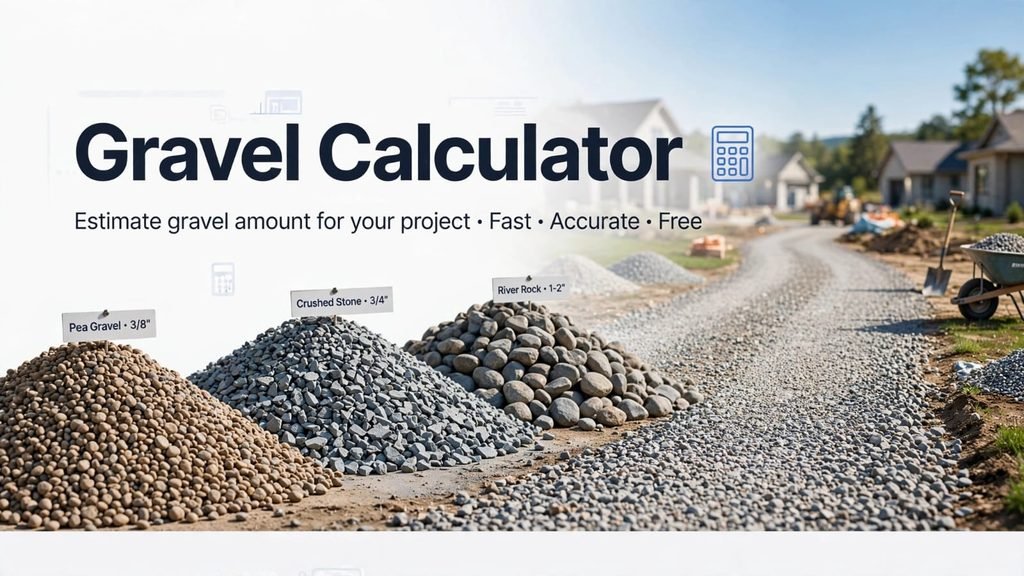
You can also use our Sand Calculator to estimate sand quantity for your construction work.
How to Use the Gravel Calculator
- Enter the length and width of the area you want to cover.
- Enter the gravel depth required for your project.
- Select your preferred units and adjust gravel density if needed.
- Enter the wastage percentage, bag size, and price if you want to estimate extra gravel, bags, and cost.
- Click Calculate Gravel to estimate the required volume, weight, number of bags, and cost.
// Rectangle Area
Area = Length × Width

// Volume
Cubic Feet = Area × Depth (in feet)
Cubic Yards = Cubic Feet ÷ 27

// Additional Gravel
Extra = Base Volume × Wastage % ÷ 100
Total Volume = Base Volume + Extra

// Estimated Weight
Tons = Total Cubic Yards × Gravel Density

// Bag Estimate
Bags = Total Cubic Feet ÷ Cubic Feet per Bag
Round up to the next whole bag.

// Estimated Cost
Cost = Total Tons × Price per Ton
Gravel Calculator Example
Here is an example of how a gravel calculator helps estimate the amount of material needed for a project. Suppose you are covering a 24 ft × 12 ft driveway area with gravel at a depth of 3 inches, using a gravel density of 1.4 tons per cubic yard.
Area: 24 × 12 = 288 sq ft
Convert depth: 3 ÷ 12 = 0.25 ft
Volume: 288 × 0.25 = 72 cubic feet
Add 10% extra material: 72 × 1.10 = 79.2 cubic feet
Cubic yards: 79.2 ÷ 27 = 2.93 cubic yards
Tons: 2.93 × 1.4 = 4.1 tons
For a project of this size, buying bulk gravel by the cubic yard or ton is often more economical than purchasing multiple bags.
Common Gravel Depths
| PROJECT TYPE | TYPICAL DEPTH | NOTES |
|---|---|---|
| Walkway or garden path | 2–3 inches | Suitable for light foot traffic |
| Patio base | 3–4 inches | Depends on pavers and soil conditions |
| Driveway top layer | 4–6 inches | A deeper base layer may be needed |
| Drainage trench | Varies | Depth depends on the pipe, slope, and soil |
Gravel Estimating Tips
Smart Gravel Buying Tips
- Choose cubic yards for larger deliveries and gravel bags for smaller jobs.
- Allow extra material for compaction or waste, especially when preparing a driveway or base layer.
- Check the supplier's estimated weight per cubic yard for your selected gravel type.
- Consider ordering a little extra when the ground is uneven or measurements are not exact.
Common Gravel Estimation Mistakes
- Forgetting to convert the gravel depth from inches to feet before calculating volume.
- Using the same density for every type of gravel or stone.
- Measuring only one part of an area when the ground has an irregular shape.
- Not allowing for extra material when the project requires compaction or leveling.
Gravel Calculator FAQ
Gravel Calculator Guide
This gravel calculator helps estimate the amount of gravel needed for landscaping and outdoor projects. It calculates volume from the area and depth, converts cubic feet to cubic yards, applies a waste factor, and estimates tons using a gravel density value.
Most bulk gravel is sold by the ton or cubic yard. Small bagged gravel is usually sold by cubic feet. This tool gives you all three estimates so you can compare delivery options and store-bought bag quantities.
Why Gravel Density Matters
Different materials have different weights. Pea gravel, crushed stone, river rock, limestone, and decorative gravel can vary in density. A general planning estimate is about 1.3 to 1.5 tons per cubic yard, but the supplier’s number should be used before ordering.
Bulk vs. Bagged Gravel
For larger areas like driveways and wide paths, bulk delivery by the cubic yard or ton is usually the most economical option. Bagged gravel costs more per unit but is convenient for small repairs, planters, and tight spaces where delivery is impractical.
Have questions? Check our FAQs.